Friday, July 31, 2009

eBay: Essential Data

eBay Getting its Groove Back?

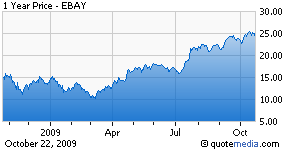
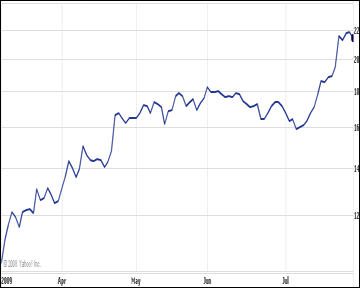
Investors have been very optimistic about eBay’s prospects. Today the stock is hovering around $22.00 – more than doubling since it’s March 9th low of $9.91. eBay’s 2nd quarter earnings looked promising and the metrics look like eBay is finally capitalizing on the weak economy.

eBay stock price since March 9th, 2009

I wanted to provide data that would give investors as much information about eBay so they can make educated decisions about their investments.

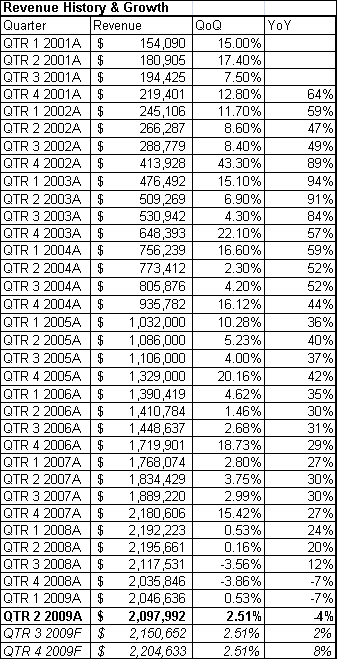
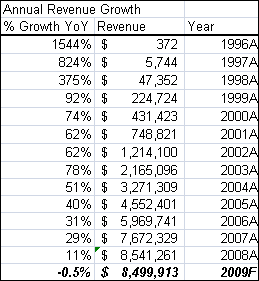
First, let me post here my own tables showing quarterly and annual revenue growth statistics.

click to enlarge


As you can see, revenue started contracting in the Q3 of 2008. This trend was not reversed until this most recent quarter when eBay's management was finally able to stem the bleeding - an impressive feat in this economy. I base my Q3 and Q4 forecasts on the 2.51% sequential growth trend of Q2


Annually you see that eBay is on track to record a slight decrease in revenue. Again, this is based on the current trajectory from Q2. If eBay continues to execute and produce a strong Q3 and Q4 - we may see record revenues for 2009 which would be huge for the eBay investment community. There is a lot of opportunity here - with the marketplaces improving and Paypal/Skype growing healthily - it is a big possibility

Make sure you take advantage of eBay’s own investor page. eBay’s investor page has more then just regular earnings reports. Detailed PowerPoint decks and investor presentations are stored here.

One of the more essential presentations was the presentation eBay gave for analyst day. It's a large powerpoint deck (over 200 slides - 2009 Analyst Presentation (14 megs).

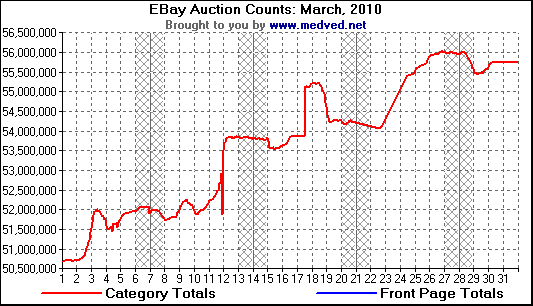
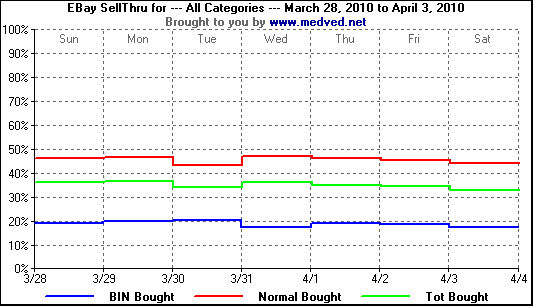
Another great site is Medved.net eBay Auction Counts. The site is a treasure trove of information and monitors eBay’s pages 24 hours a day, 7 days a week, at 1.5 hour intervals for their auction counts and now, the sell-through statistics.

A look at the 2009 auction counts show a huge increase in listings. This is especially positive since the 2nd and 3rd quarter traditional have been eBay’s weakest and usually have a drop in listings. Having growth during these times is, I believe, a testament to eBay’s counter-cyclical nature. Some people have called eBay “recession proof”. I believe as the economy continues to struggle and more and more people are out of work – that old doohickey that they bought during the boom times are getting listed on eBay – conversely, people with limited budgets wouldn’t mind a “like new” doo-dad if they can save some extra money.

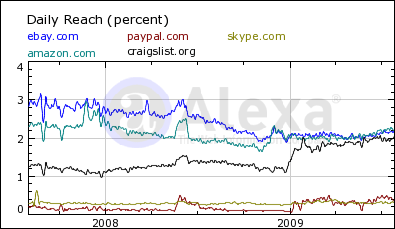
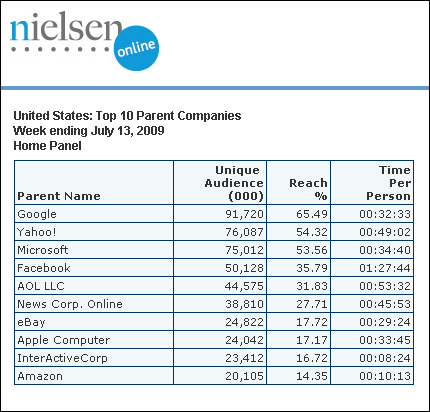
The next sites that are useful are traffic rankings for ebay’s properties. You should always use different sources to come to a sort of “average” traffic ranking since ranking sites you their own type of data gathering. More often then not, the true ranking lies somewhere between different sites.

The two I use are Alexa.com


Neilsen Online


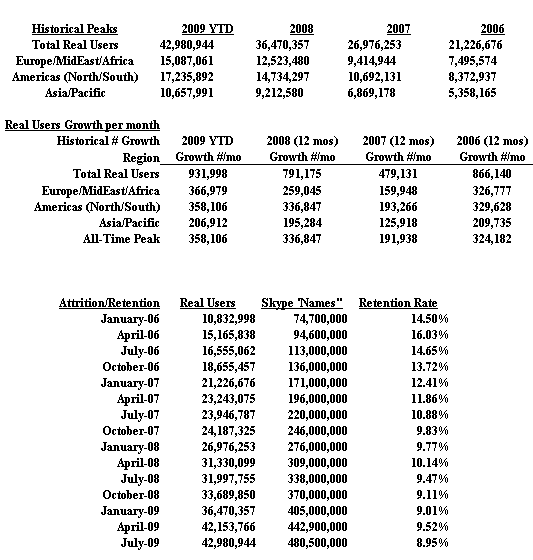
For Skype usage, The Borderless Communicator is essential. This site records a huge amount of user information and has shown steady cyclical growth for Skype.

I hope readers of this posting find this information useful.

Thursday, July 23, 2009

eBay Is Finally Stabilizing

It’s been a while since I’ve written about eBay (EBAY). My previous articles have been very bullish on the prospects of eBay. Since those articles, eBay dipped to a low March 9th low of $9.91, but has since enjoyed a tremendous rally and more then doubled to settle at yesterday’s closing price of $20.37.

I wanted to review yesterday’s quarterly report in the context of this rally and assess the condition of the patient. (See Q2 conference call transcript here.)

Doctor, We’re Losing Him

During the last 3 quarters, eBay was basically on life support. Its core marketplaces were not only contracting, but many people were also questioning the other core components; namely PayPal and Skype. I argued that while the pessimism was warranted, the poorly performing marketplace was effectively already priced in the low stock price.

I argued that PayPal and Skype were still incredible businesses and that while the marketplace was suffering growth concerns, investing in eBay would still be prudent on the merits of PayPal and Skype alone.

Regardless of how valuable PayPal and Skype are, I’m happy to report that yesterday’s quarterly earnings announcement has probably given a collective sigh of relief to many of eBay’s investors.

We’ve Stabilized the Patient

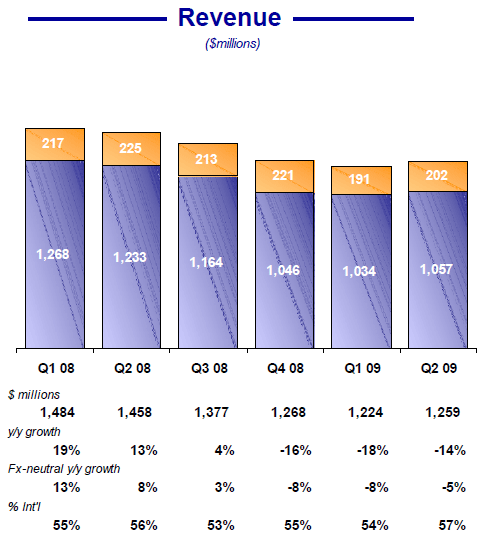
A look at core marketplaces shows the most promising development for eBay this quarter – eBay’s executive team has finally been able to stem the bleeding. Quarterly sequential growth for marketplaces has finally increased for the first time in 5 quarters.

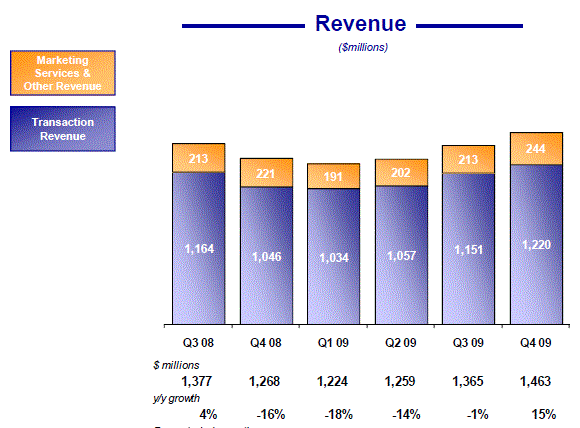
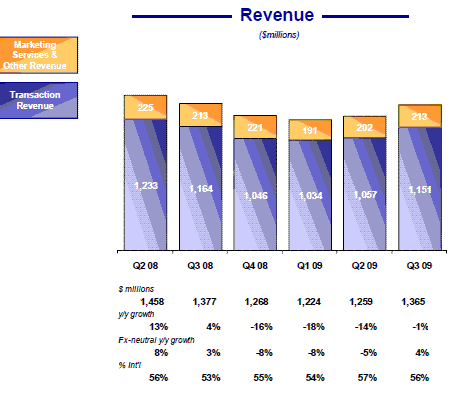
MARKETPLACE REVENUE

Marketplaces generated 1.259 billion in revenue for the quarter. While it still represents a 14% decrease in year-over-year revenue, it does represent real sequential growth quarter to quarter. The most important factor here to consider is they’ve stopped the contraction, and even squeezed out growth in this terrible climate – no small feat. This is a good first step.

eBay’s marketplace is not out of the woods yet; with increasing competition from Amazon (AMZN) and independent resellers; eBay has many enemies. I do believe that John Donahoe feels the fire under him, and nothing helps a business improve more than healthy competition.

In the last two years, eBay has introduced a myriad of controversial and often draconian measures (mainly toward sellers) aimed at making the marketplace safer and more trusted. It was radical and swift, to say it alienated many buyers would be an understatement.

However, a positive effect was eBay has lowered fraud rates and increased customer satisfaction. This has been John Donahoe’s strategy all along, to make the buyers king.

Whether the wisdom of "customer is always right" eventually pays off is yet to be seen, however if yesterday’s results are any indication of returning customers, Donahoe’s radical changes may finally be starting to pay off.

What’s the Prescription Now?

Now that eBay appears to have found a bottom, I would encourage Donahoe and team to now re-engage the sellers. The plethora of angry, distraught, and hostile ex-sellers are ubiquitous on any web forum about eBay (you’ll find many eBay haters commenting on this article I assure you). I believe a lot of the negative sentiment was aggravated by eBay’s own actions. The speed, magnitude, and inflexibility of the changes created a lot of disgruntled sellers. I believe a re-engagement of sellers should be the second part strategy of re-inventing eBay.

The New Crown Jewel

I’ve stressed in the past that PayPal has largely been ignored under the eBay umbrella of brands. I hope yesterday’s earnings will prove beyond any doubt the power of this business.

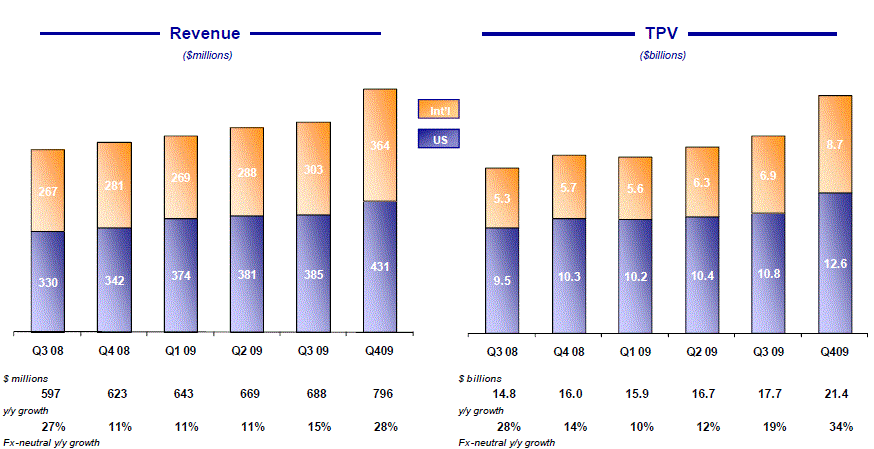
PAYPAL REVENUE

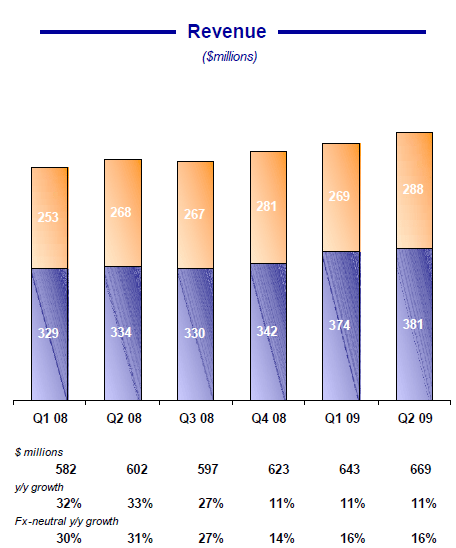
In this tough business environment, PayPal continues to fatten and lay ever bigger golden eggs for eBay.

Growing 4% quarterly and 11% annually is impressive in this challenging environment. PayPal continues to expand market share, leaving competitors like Google Payments (GOOG) in the dust. The strategic acquisition of Bill Me Later I believe, will eventually pay dividends as it becomes a more widely accepted form of credit (especially in the credit crunched market we are in)

PayPal has no signs of slowing down any time soon, and if they can perform this well in this environment, imagine how they will do if and when the economy rebounds.

Diamond in the Rough

Now we come to Skype. The unwanted step child that everybody likes to rag on. Already slated for an IPO, Donohoe has finally decided to try and toss this albatross off eBay’s neck. One would think that Skype is not profitable and contracting.

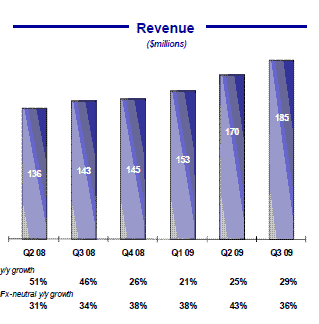
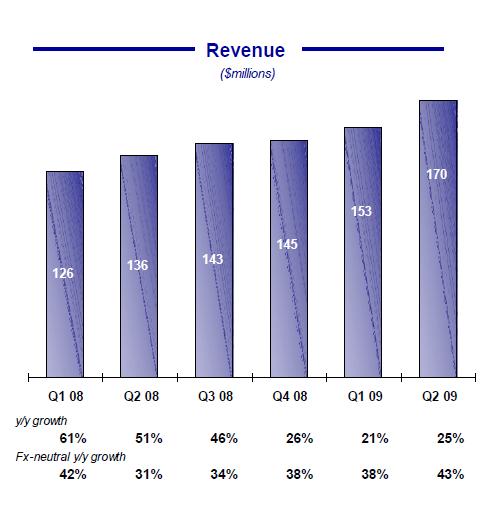
But yesterday’s results have reinforced what I’ve been saying now for a long time…Skype is a good business. 11% quarterly sequential growth and 25% year over year growth – In this environment is nothing short of remarkable. Given current trajectory, Skype is conservatively estimated to book 700 million in revenue for 2009. Based on comments made in the past, we would expect a net gross profit around 100 million.

Again, nothing astronomical but any business that is growing and profitable in this climate should not be ignored. Google realizes this, that is why they’ve launched their direct competitor to Skype: Google Voice.

SKYPE REVENUE

What Lies Ahead for eBay?

eBay spends millions of dollars a month at Google in adwords. I’ve written a controversial post arguing that Google should have seized the moment and acquired eBay during the doldrums of the financial crisis. I still believe eBay is a natural fit. Google wants to be in the payments and voice business.

As for marketplaces, it is true that it is completely tangental to Google’s search business, however, this is exactly the reason why Google should acquire it….to expand from their one-trick-pony of adwords.

Naturally marketing eBay’s listings would yield automatic cost savings and increased marketplace activity. Even if eBay is a dying business model, as I’ve argued - the stock price has effectively priced it out – and Google would simply be buying Skype and PayPal, while getting eBay for free.

With the stock price almost doubling in the last quarter, the value proposition is no longer there, but I still think that Google acquiring eBay would create a blank slate on all the negative seller sentiment – with an introduction of clear and polices that are no longer a surprise to sellers. This coupled with the search engine technology and natural keyword/adword placement would cement Google as the preeminent place to search for all things retail and how to pay for them as well.

Friday, January 30, 2009

The SKYpe Is Not Falling

I’ve written before about the amazing potential of one of the most maligned and misunderstood acquisitions in my recent memory. eBay’s (EBAY) purchase of Skype has been unanimously decried with such words as “irrational” and “foolish.”

With such negativity, one must assume Skype is a dying, unprofitable, debt laden business!

The Little Engine that Could

Malcom Gladwell is a widely read anthropologist with a popular series of books about the sociology of business and talent. One such book, The Tipping Point talks about those great paradigm shifts that disruptive technologies have created through history. Gladwell specifically targets that magical moment where an idea/product reaches a point of no return; where the positive feedback of user adoption creates a virtuous upward cycle that is unstoppable (hence the title of the book.) Is Skype reaching that point?

An interesting thing is happening to Skype user rates that seem to be hardly reported.

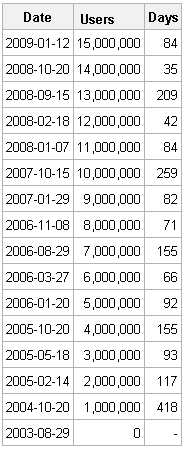
One often ignored metric that many analysts glance over is the concurrent user number. This number represents the total number of users that are actively on the Skype network. I argue this metric is one of the most important metrics when analyzing Skype; as it represents “real’ user adoption. Forget about user accounts registered (a user can register more then once or not even use it) – the real number you should be looking at is what number of users are actually logged in and USING Skype at the same time.

This graph shows the million milestones of concurrent users and the number of days it took to reach each consecutive million concurrent user rate.

On 1-26-2009 – Skype had a record 15,952,085 users. That’s almost an additional 1 million users since the last million milestone of 1-12-2009 – This is a record pace – only 16 days! At this trajectory – Skype is not only growing, but accelerating growth.

You can always track the current user log in rates in this helpful site (Source: Borderless Communicator).

Show Me The Money!

Ultimately, I do understand that user rates aren’t worth a bucket of beans if it doesn’t translate to revenue.

Skype Year End Revenues

  • 2007 Revenue: 382 Million
  • 2008 Revenue: 551 Million

This represents a healthy 44% Year over Year growth.

Assuming that the revenue declaration continues at its current pace and Skype grows revenues at 33% Year over Year for 2009, this would yield 2009 pro-forma operating income of $117 million and tax-adjusted pro-forma earnings of approximately $108 million. Skype's operating margin (excluding options) is expected to come closer to 16% in 2009. Again, just being very conservative and a forward P/E multiple of 30x (again restricting PEG to 1.0x) we get a current valuation of roughly $3.2 billion. 3.2 Billion Is more than the 3.13 Billion dollars that eBay paid and definitely more than what eBay has valued Skype at 2.23 B.

I concede to Skype’s detractors that Skype revenue is slowing due to the natural effect of having free calls as more and more Skype users can talk free to fellow Skype users as more of their friends join. However, I’m not concerned about this as much as I am excited about what I believe to be the next paradigm shift that will ultimately take Skype to the moon.

VOIP’s time may finally come

I mentioned previously that Gladwell's book The Tipping Point was all about that moment where an idea or technology reaches critical mass where there is no point of return. Gladwell’s book discusses many instances where for whatever reason, a technology sometimes take a while to catch on. Take texting for example, mainstream in Asia for years before the first teenager got sore thumbs broadcasting his or her life on Twitter. There is now a plethora of VOIP offerings, the most high profile disappointing offering being Vonage (VG).

I argue that the wild card is cell phone apps. Skype already has an application on Google’s (GOOG) Android OS and is soon to complete one for the iPhone.

For those not too savvy about what this means, well it entails very cheap domestic / international calling regardless of how many minutes you have on a phone plan (as long as you have an internet connection like the iPhone). I’ve been using the former applet on my cell phone to call internationally, and I’ve found no easier way for me to call the world cheaply on my cell phone than Skype. I believe the future of mobile devices will slowly move from a ‘per minute’ model to a flat rate model that includes voice and data. Think of this shift as like the early days of the internet (i.e. AOL) where you had to dial up and pay “per minute.” Eventually the ‘per minute’ model changed to a monthly flat rate fee. Many of the wireless providers already provide ‘unlimited’ minutes for a flat fee. With iPhone monthly user fees nearing $100 – the spread between the cost of unlimited minutes and a variable monthly fee is getting thinner and thinner.

As users demand more ubiquitous internet access, to me it’s a no brainer that it’s a matter of time until a data connection becomes an “always on” proposition. This shift is further bolstered by the launch of “netbooks” (micro laptops that stress mobile internet connections). While unlimited minutes would ultimately depress Skype’s advantage for domestic calls (something that Skype was never used much for) – it would only amplify the value proposition for Skype’s main attraction: international communication. If my predictions for unlimited minutes never happens, Skype would benefit even more; by allowing users to circumvent their ‘minutes limit” for domestic calls and the international benefit still remains. I argue this demand will only grow as the world becomes more and more integrated and mobile devices continue to grow. Skype is right there ready to fill gaps from continued shift to mobile communications (on and off the desktop

A Diamond in the Rough

I believe Skype presents a tremendous opportunity, and has been so badly tarnished by its parent's (eBay’s) troubles that people are ready to throw eBay’s baby out with the bathwater. Whether eBay ultimately sells Skype or hangs on to it, it’s a great asset that is ignored by and large by the investing community and I hope this article brings to light the enormous opportunity of becoming the de facto standard of voice communications that Skype presents.

Friday, January 23, 2009

Why 'GooBay' Makes Sense

Yes, this is yet another article about why company A should merge with company B. I hope what this article lacks in originality will be more than made up for with plain old common financial sense.

It’s Good To Be King

Google’s (GOOG) earnings report yesterday has solidified without any doubt that Google continues to be the king of the dot com world. Google had 4th Quarter revenues of 5.7 billion, representing an 18% increase over the fourth quarter 2007. These results are remarkable considering the current macro economic challenges we are facing. These earnings only add to Google’s formidable war chest – $15.85 billion as of December 31, 2008 to be exact. Google has not only been able to deliver – but it also has been able to keep the wolves at bay.

Microsoft (MSFT) and Yahoo (YHOO) continue to struggle to gain reasonable traction in the search business. As of December, Google has still been able to maintain is formidable lead against competitors. (Source: Comscore.) With all of this going for Google, I argue that now is the time for Google to seize the opportunity of depressed market valuations and seal its claim as the preeminent global internet powerhouse.

One Trick Pony?

It was nearly a year and a half ago that Steve Ballmer called Google a “one trick pony,” pointing out that Google has not had much success in business areas outside search engine advertising. What was true then is still true now. A look at the full year results for 2008 confirm this. The earnings report yesterday illustrates that 97% of all Google’s revenue came from advertising.

There is no question Ballmer is right with his criticism, granted a darn good money making pony, but still one trick nonetheless. People that disagree with this assessment need look no further then Google’s own efforts to (what’s that word?) DIVERSIFY. Google Base, Google Checkout, and the Android mobile OS come to mind. In fact, the desire to come up with new and inventive things beyond search is so ingrained in the culture – the company encourages personal projects and has a whole “labs” section devoted to such arcane subjects as maps of Mars (how the company would ever monetize that was always beyond me).

Why eBay (EBAY)?

I ask why not? It’s a natural fit. Google has already tried to create an eBay clone with Google Base. It already tried to create a PayPal clone with Google Checkout. It was also no secret that Google was one of the few suitors during the bidding wars for Skype.

As I’ve discussed in previous articles; many investors do not realize that eBay.com is a huge conglomerate of dot com properties. My previous thesis even went as far as showing that eBay.com proper was actually not even priced in at a valuation. That was when eBay was trading far higher than today. Based on current valuation – eBay is even more of a compelling value play. (Its price is nearing book value.)

The Crown Jewel

As I said, it’s no secret that Google derives 97% of its revenue from ads from its search functions. It's a tenuous position considering the fickle loyalty we witnessed when users seemed to flock overnight to Google from Yahoo back in early 2000s. Regardless of the ability of another site to disrupt Google’s blue ribbon position, Google is smart enough to know that it should diversify. Enter Google Payments, at less than 10% market share, and neophyte services (like buyer/seller moderation) – it’s not exactly the PayPal killer it was perceived to be.

Google would be able to diversify and become the leader in not one but two segments of the internet landscape in one fell swoop. What Google is to search, PayPal is to peer-to-peer payments. With PayPal’s recent acquisition of Bill Me Later, it now commands a nearly 90% market share of e-payments. Like Google, PayPal grew revenue and earnings in Q4 of 2008 – it is the undisputed crown jewel of eBay’s empire; growing and very profitable. But why stop at two?

A Jewel in the Rough

Skype has always been an enigma to me - based on why my financial colleagues have called it, you would think it is the dot com equivalent of the Yahoo/ broadcast.com acquisition. Adjectives like “overpriced”, “unprofitable”, “no future”, “no synergies”, “biggest loser” – by the time you're done reading about Skype, you would think it was as limp as the sock puppet from Pets.com. If there is one thing I agree with the critics, is there are no natural synergies with eBay.com and/or PayPal. Skype doesn’t offer a significant advantage over picking up a phone and calling a seller (if you really wanted to). But what it lacked in synergies with an auction site – I believe is the opposite with mobile devices.

It is true that certain technologies, for whatever reason, sometimes take a while to catch on. Take texting for example. It was mainstream in Asia for years before the first teenager got sore thumbs broadcasting his or her life on Twitter. I believe VOIP is similar to one of these technologies. Vonage (VG) never took off, nor did a whole host of available VOIP offerings by big telecoms.

However, the wild card is cell phone apps. Skype already has an application on Google’s Android OS and is soon to complete one for the iPhone. For those not too savvy about what this means, well it means free or very cheap domestic/ international calling regardless of how many minutes you have on a phone plan. I’ve been using the former applet on my cell phone to call internationally, and I’ve found no easier way for me to call the world cheaply on my cell phone then Skype.

Skype now has been profitable for 2 years, and is ACCELERATING user growth (yes, even in this tumultuous 4th quarter). Skype earned 550 million in revenue in 2008. Assuming the current economic crisis hits revenue growth and causes it to decelerate by half to 25% for 2009 next year, we can still expect somewhere around $688 million in 2009 revenue.

A Tarnished Gem

eBay has made a string of extremely controversial moves in 2008. Make no mistake, eBay is undergoing a serious midlife crisis. From prohibiting sellers from leaving negative feedback, to changing free structures, from launching a new flawed search engine, to draconian measures that kicked out many sellers – it would be an understatement to say that eBay changed in 2008. These changes were driven top down as a strategy to go directly head to head with traditional retail outlets like Amazon.com (AMZN).

John Donahoe is attempting to shake the ‘swap meet’ reputation of eBay to a traditional ‘safe’ shopping destination. The changes alienated many buyers and sellers – many buyers turned away by things like the arcane search engine flocked to established retail outlets like Amazon, and many disgruntled sellers have left (taking with them much needed revenue). It’s not hard to see how much negative sentiment eBay has generated with sellers - peruse any message board regarding eBay and you’ll find throngs of ex-eBay sellers spending an inordinate amount of time bashing the company.

Google swallowing up eBay would first accomplish what many sellers and investors have been calling for: a change in management, and second (and more importantly), it would give eBay a much needed shot in the arm by increasing its visibility by increasing the number of eBay listings that would now be subsidized by default Google search placement. Overnight, eBay would increase the amount of traffic it receives simply by Google using its industry leading search engine to funnel prospective buyers to eBay’s listing pages.

Google’s undisputed expertise could make the eBay search engine second to none for product search. In a two bird one stone move, Google could win over ex-eBay sellers by promising a more diplomatic approach to buyer/seller dynamics and increase eBay’s bottom line. Google could appease established advertisers by only displaying ads from casual sellers (a simple filter by excluding high feedback sellers). This would re-invigorate the consumer to consumer marketplace at a time when a lot of us could use some extra cash emptying out our attic.

What Cost?

The question is, what is eBay.com really worth?

Well, in a previous post, I laid out all the numbers and concluded that current valuations have pretty much already excluded eBay.com proper as part of the total valuation at a price of $15 per share.

The value play is all the more compelling at eBay’s current price of $11-$12. Even at double eBay’s current valuation of $15B ($30B Purchase Price) – I argue acquiring eBay and all its assets would be a steal. Could GooBay be a reality? Only time will tell.

Friday, October 24, 2008

The Skype's the Limit

eBay’s acquisition of Skype in 2005 has been one of the many controversial moves eBay been recently making. The purchase was originally marketed as the missing piece to create the holy trinity in eBay’s hallowed e-commerce halls (along with eBay’s auction sites and PayPal.) The thinking was that Skype would accelerate transactions among strangers as they communicated to each other more efficiently. eBay later found out that people are more interested in buying/selling quickly then chatting it up about those transactions. Consequently, Skype did not live up to all the hype, and eBay has been paying for the acquisition ever since. So the question remains, eBay goofed – but how bad? How bad really is Skype? I think if you look at their performance; you’ll find surprisingly that Skype is not bad at all…

What did eBay pay for Skype?

First things first, how much did eBay exactly pay for Skype? I’ve noticed a lot of numbers floating around the web anywhere between 2.6 to 4.1 Billion. The variance stems from the tiered payment structure that was negotiated to be based on Skype’s future performance. EBay had agreed to initially acquire Skype for $1.3 billion in cash and $1.3 billion in stock and would pay up to $1.5 billion more if Skype met financial targets by 2008 and 2009. eBay ended up paying 530 million out of the 1.5 billion performance portion to settle the transaction. So the grand total paid was 3.13 Billion dollars. If that wasn’t complicated enough, eBay at the same time took a 900 Million dollar charge basically valuing Skype at 2.23 B (out of the 3.13 B they paid)

How is Skype doing anyway?

So investors agree eBay overpaid and eBay agrees with them. So, just how bad is Skype? Well, let me breakdown revenue numbers and current growth rates and you be judge.

Revenue in the past 4 quarters came in at 521 million vs. 332 million for the previous 4 quarters giving us a growth rate of 56.9 % Y/Y, a growth rate that currently eclipses Amazon, Yahoo and yes…even Google.
But what good is growth if that growth is drastically slowing down? - Amazingly, growth is not slowing down – in fact it’s accelerating! Just this week Skype logged its fastest growth rate of user activity in its history – Skype logged an additional one million more concurrent users (a good measure of usage) in just 35 days.

So here we are; we have a company growing 50+ percent year over year, is currently accelerating growth and most importantly profitable. It sounds to me like we got the bases loaded for investors.

What’s Skype worth?

Skype had Q3 2008 revenue of $143 million and is on track to reach 2008 revenue of $570 million. Let’s be conservative and assume the current economic crisis hits revenue growth and causes it decelerate almost half to 30% next year, we can still expect somewhere around $741 million in 2009 revenue.
Skype's operating margin (excluding options) is expected to come closer to 16% in 2009. This would yield 2009 pro-forma operating income of $119 million and tax-adjusted pro-forma earnings of approximately $107 million. Again, just being very conservative and a forward P/E multiple of 30x (again restricting PEG to 1.0x) we get a current valuation of roughly $3.2 billion. 3.2 Billion Is more than the 3.13 Billion dollars that eBay paid and definitely more then what eBay has valued Skype at 2.23 B

Sometimes it’s okay to be a third wheel.

I understand Skype does not have any of the promised synergies with eBay. As a standalone company however – it would definitely be valued much more then the unloved step child it is now. Skype should be a net positive toward eBay, and at worse have a neutral effect on investor sentiment. Being a third wheel can be okay as long as that wheel is carrying its own weight…say like on a tricycle.

Friday, October 17, 2008

Getting something for nothing

In my first post I had made the point that investors have un-fairly punished the whole of eBay for their struggling core site. I pointed out that eBay is now made up of a lot more then just auctions and their healthy high growing properties are now suffering “guilt by association.”

Paypal is Sleeping with the Enemy

I received many challenges on how I breakdown my original revenue lines, and I want to thank those critics. My goal is always first give all the facts, and then give my opinion.

Here are two good points that eBay shorts made.

1) Much of Paypal’s revenue comes from eBay’s auctions sites
2) Much of eBays Marketing services also come from eBay’s auctions sites

I want to tip my hat to people that pointed this out and take these points into account.

Let's take a closer look

So how much of PayPal’s revenue comes from the (now perceived as cancerous) eBay auction sites?

49% and falling – here is the percentage of Paypal’s revenue from eBay auction sites for the last 4 quarters

56% Q4 2007
54% Q1 2008
51% Q2 2008
49% Q3 2008

As you can see the trend is that more and more of Paypal’s revenue is coming not from eBay auctions sites but from Merchant Services, like the non-widely known recent agreement for WalMart.com to accept Paypal.

In an effort to sever revenue associated with eBay; let me be conservative and assume half of the revenue generated from Paypal’s eBay relationship will go away – that still gives us a ttm (trailing twelve month) revenue total of 1.73 Billion (out of 2.34 B) in revenue and growing 27% Y/Y. During a recent investor conference John Danohoe disclosed that PayPal’s operating margins (excluding options) is expected to come around 20% in 2009 – So that gives us a net income of approximately 346 Million for the Paypal unit for the last 12 months.

Following the same exercise for Marketing Services (assuming one half of the advertising on eBay will be toast and a 40% operating margin) we get a (ttm) 263 million in net income and growing at 50+% Y/Y

We call can agree Skype has no synergies with eBay and we can safely claim their full net income does not rely on eBay auctions sites. So Skype’s (ttm) contribution is approximately 89 million in net income growing at 40+% Y/Y (again using John Donohoe’s disclosed operating margin of Skype of approximately 16% & 40% for marketing revenue)

In total we get:

346 million from Paypal (excluding ½ of eBay transactions)
263 million from Marketing Services (taking out ¼ for ‘foreseen’ eBay losses in traffic)
89 million from Skype
----
(ttm) Net Income (excluding taxes) of 698 Million

That gives us an EPS of non-Auction entities of .54 cents a share based on a diluted share count of 1.29 B

.54 cents per share gives us a P/E (based on $15 as of early 10/17/2008) of 27*

Okay, okay so what does this all mean?

How does a P/E of 27* compare to other large Dot Coms?

As of early 10/17/2008

We get

Google@ 282 P/E is 25
Yahoo@13 P/E is 25
Amazon@53 P/E is 38
Bidu@240 is 71

So essentially your getting healthy high growing companies like Paypal, Skype, Kijiji, Shopping.com, 25% of Craigslist, Shopping.com, and Rent.com (among others) for a reasonable P/E of 27*. This is in-line with other dot coms, and more importantly completely taking eBay.com (and all its international counterparts) out of the equation.

Don’t throw the Baby out with the bath water

I hope I’ve proven my point that the market has completely written of eBay auction sites as the next AOL. This may be true, but as I've clearly laid out above - investing in eBay today at $15 has this assumption already priced in; you’re in effect getting eBay.com (and all it's international auction sites) for free. I personally don't think eBay is going away any time soon, and I acknowledge the monumental challenges ahead. The fact remains that there is still no better place to sell or buy your vintage 1977 Led Zeppelin shirt...and as the Oracle says, if you can something for nothing, you’re already ahead.


*Will be higher depending on tax rate

Thursday, October 16, 2008

The 3rd Quarter is here and eBay is in the basement.

Make no mistake about it, the current market sentiment has largely written off eBay as a failing business. Lower GMVs (Gross Market Value), stalled user growth (at 3% Y/Y), economic downtrends, new radical changes to the core site, and extreme competition from other sites like Amazon are all putting unprecedented pressure on eBay.

With so much negative forces, it’s no surprise that eBay is being thrown in the dumpster.

A more holistic view
There are legitimate concerns about deceleration to the eBay.com property (especially in the US market). I believe though that the investment community at large is missing key pieces of the EBay Empire. The only way current valuation makes any rational sense would be to assume that the other eBay properties (including their fast growing Paypal.com/Skype components) will undergo a contraction in revenue; something that even naysayers have trouble foreseeing.

Just a few facts
eBay generated 2.11 billion dollars in revenue in the 3rd Quarter, of this 952 million (or 45%) came from sources outside eBay.com! Let me break it down

597 million from Paypal (27% Y/Y growth)
212 million from Non-eBay sites, Shopping.com, Rent.com, Kijiji (29% Y/Y growth)
143 million from Skype (46% Y/Y growth)
----
952 million

As you can see those are very healthy growth numbers (especially in this economic climate) True these divisions do have lower margins then the traditional eBay sites, but fortunately their high growth rates offset this shortcoming for now. Do people realize that almost half of eBay is not eBay.com (as people know it?)

Getting something for nothing
I’ll let people absorb this and in my next post, I’ll show how I believe investing in eBay today is like getting “something for nothing”

Good Luck everybody